



Ruby is an open-source, interpreted programming language created by Yukihiro "Matz" Matsumoto in 1995. It was designed with developer happiness in mind, offering clean and readable syntax that allows programmers to focus on solving problems rather than dealing with complex language rules.
Ruby is most widely recognized as the language behind the Ruby on Rails framework, which has powered many successful startups and enterprise applications.
Ruby
Why Choose Ruby?
Ruby provides an excellent balance between simplicity and flexibility. Some of its major advantages include:
- Easy-to-read syntax
- Fully object-oriented architecture
- Rich collection of built-in libraries
- Strong community support
- Rapid application development
- Cross-platform compatibility
- Excellent testing ecosystem
- Key Features of Ruby
Ruby vs Other Popular Programming Languages
Feature | Ruby | Python | Java |
Primary Use | Web Development | AI, Data Science, Automation | Enterprise Applications |
Performance | Medium | Medium | High |
Object-Oriented | Fully | Multi-paradigm | Fully |
Web Framework | Ruby on Rails | Django, Flask | Spring Boot |
1. Elegant Syntax
Ruby code is concise and resembles natural English, making it easier for beginners and experienced developers alike.
puts "Hello, Ruby!"2. Everything is an Object
In Ruby, every value is treated as an object, including numbers, strings, and even classes themselves.
3. Dynamic Typing
Ruby automatically determines variable types during runtime.
name = "Alice"
age = 25
Developers don't need to explicitly declare data types.
4. Powerful Frameworks
Ruby on Rails enables developers to build secure and scalable web applications quickly by following convention over configuration.
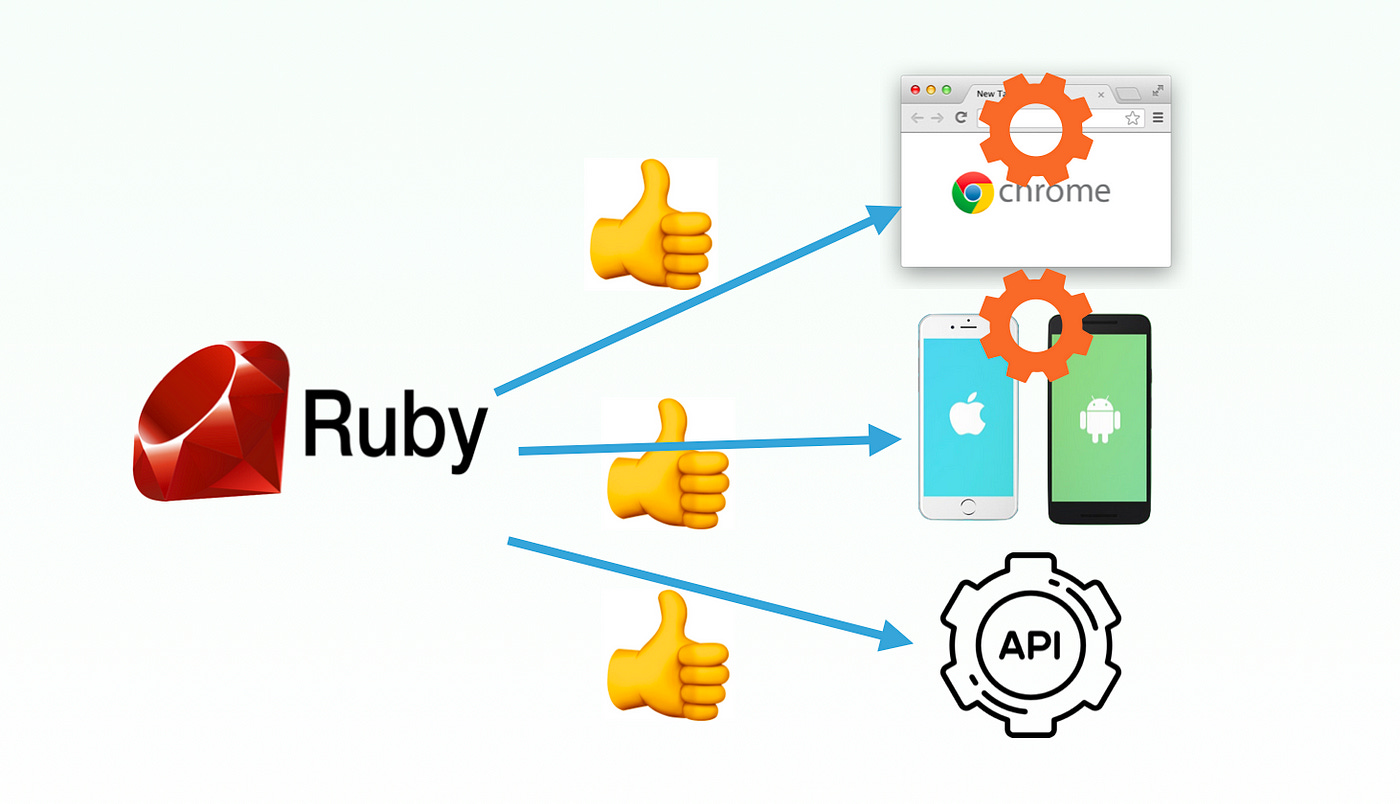
Popular applications built with Ruby include:
- GitHub
- Shopify
- Basecamp
- Airbnb (early versions)
- Hulu
5. Rich Gem Ecosystem
Ruby packages are called Gems. Thousands of Gems are available for:
- Authentication
- API development
- Database integration
- Image processing
- Testing
- Background jobs
- Common Applications of Ruby
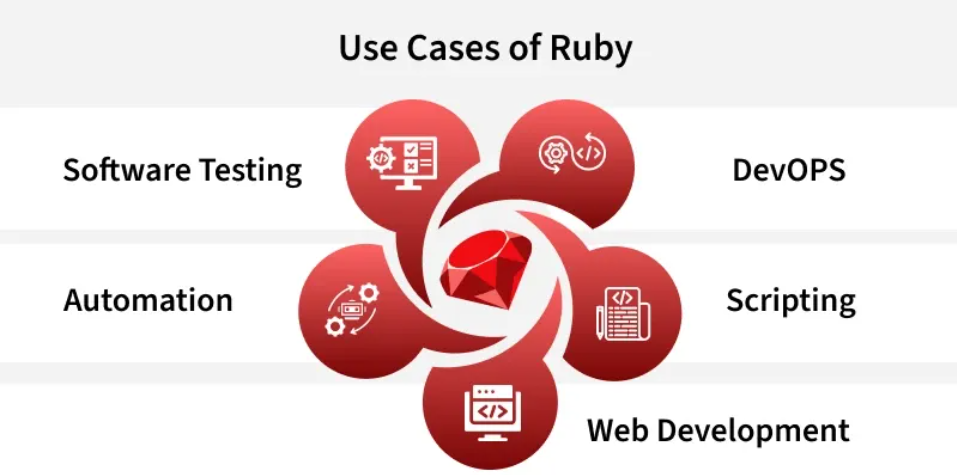
Ruby is used in many different areas of software development:
- Web application development
- REST API development
- Automation scripts
- DevOps tooling
- Static site generators
- Data processing
- Command-line applications
Best Practices for Writing Ruby Code
Writing clean and maintainable Ruby code is just as important as making it work. By following Ruby best practices, developers can improve code readability, reduce bugs, and make applications easier to maintain and scale. Using meaningful variable names, keeping methods short, following Ruby naming conventions, writing automated tests, and leveraging built-in libraries before adding external gems are all recommended practices that contribute to high-quality Ruby applications.
- Follow Ruby naming conventions.
- Keep methods short and focused.
- Use meaningful variable names.
- Write automated tests using RSpec or Minitest.
- Leverage built-in Ruby libraries before adding external Gems.
- Follow the Ruby Style Guide for consistent code formatting.
01
Fully Object-Oriented and Flexible
02
Rapid Development Ruby on Rails
03
Simple and Readable Syntax
Ruby is designed to be easy to read and write. Its clean, expressive syntax allows developers to understand and maintain code more easily, making it an excellent language for beginners and experienced programmers alike.
Ruby's popular framework, Ruby on Rails, provides built-in tools, conventions, and reusable components that significantly speed up web application development. Developers can build and deploy applications faster with less code.
Everything in Ruby is treated as an object, enabling a consistent and powerful programming model. Combined with Ruby's dynamic typing and flexible features, this allows developers to write reusable, maintainable, and scalable applications.
Advanced Ruby on Rails Concepts Every Developer Should Know
- Master Active Record Optimization – Improve application performance by using eager loading, indexing, and efficient database queries.
- Use Service Objects – Keep controllers and models clean by moving complex business logic into reusable service classes.
- Implement Background Jobs – Handle time-consuming tasks like sending emails and processing files asynchronously with Sidekiq or Solid Queue.
- Leverage Caching – Reduce response times and database load with fragment, low-level, and Redis caching.
- Follow Security Best Practices – Protect applications against SQL injection, XSS, CSRF, and other common vulnerabilities.
- Write Comprehensive Tests – Build reliable applications using RSpec, Minitest, FactoryBot, and Capybara.
- Understand Design Patterns – Apply patterns such as Service Objects, Decorators, Presenters, and Policies for scalable code.
Ruby Memory Management
Advanced topics include:
- Garbage Collection (GC)
- Object allocation
- Frozen strings
- Memory profiling
- Benchmarking
Conclusion
Ruby remains one of the most enjoyable programming languages for building modern applications. Its clean syntax, object-oriented design, and productive development workflow make it an excellent choice for beginners and experienced developers alike. While it may not be the fastest language for computationally intensive tasks, Ruby excels at rapid web development, automation, and creating maintainable software. Whether you're building your first application or developing a large-scale web platform, Ruby provides the tools and flexibility to bring your ideas to life efficiently.
Frequently Asked Questions
Do I need a degree to be a childcare worker?
Can I study while working in a nursery?
What is the highest level qualification available?
Ready to Start Your Project Management Career?
South London College offers accredited Project Management courses.